

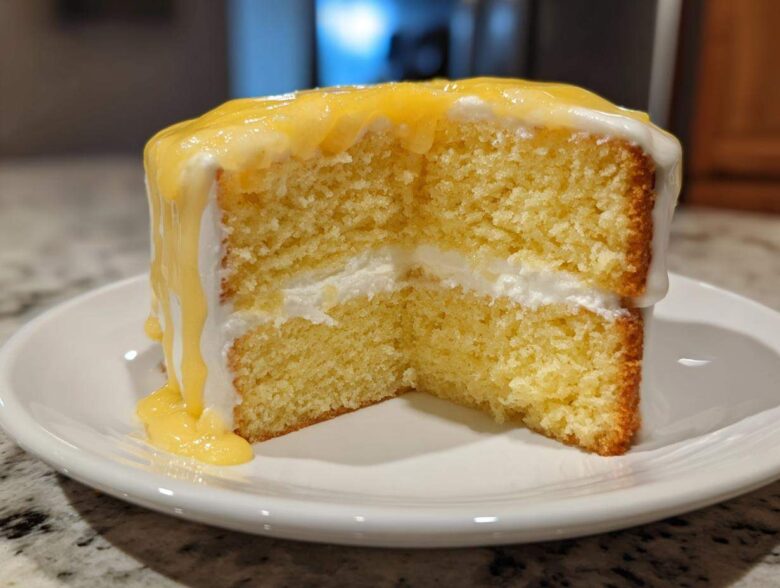
Oh man, is there anything that screams ‘Spring has finally arrived’ louder than a perfect slice of lemon cake? I want you to forget those dry pucks you sometimes get at the store because I’ve spent years—seriously, years—tweaking this thing. I finally cracked the code on the ultimate, super moist lemon cake recipe from scratch, and the resulting layers are unbelievably tender. I remember the first time I pulled this baby out of the oven after finally mastering the zest-to-juice ratio; the house smelled like pure sunshine! Trust me when I say this specific lemon cake recipe is the one you’ll want to save forever for birthdays or just a Tuesday afternoon treat.
If you’re looking for that intense, zesty tang paired with cloud-like moisture, you’ve absolutely landed in the right spot. That’s why I’m sharing all my secrets!
Why This Is the Best Lemon Cake Recipe You Will Ever Make
I know, I know, everyone claims they have the Best Lemon Cake Recipe, but stick with me here. This isn’t just theory; this is tested, baked, and approved by my very picky sister! What sets this apart is the combination of intense flavor and cake structure. You get that bright, zesty punch right up front, but the crumb stays wonderfully soft.
- It delivers that perfect, eye-opening tangy-sweet balance.
- The texture is unbelievably light—never gummy or heavy.
- It holds up beautifully when layered and iced!
Achieving the Perfect Moist Lemon Cake Recipe Texture
Moisture is everything when it comes to citrus cakes, right? You want that tender bite, not dry edges. We achieve this magic using full-fat whole milk instead of thinner alternatives, which really helps the butter emulsify correctly while mixing. Plus, we use fresh lemon juice *and* fresh zest, so you get liquid moisture mixed in with those tiny flavor bursts from the zest.
Ingredients for Your Moist Lemon Cake Recipe
Okay, let’s talk about what you need to grab from the pantry. Getting the ingredients right before you even turn the oven on is half the battle won! Seriously, measure everything out first—mise en place, that’s what the fancy chefs call it, but really, it just means less stress later when things get moving fast. You’ll notice we’re using the full zest and juice of real lemons here; trust me, nothing beats that fresh punch!
We’ll break this down into two simple lists: what goes into the actual cake layers, and what we use for that irresistible glaze later on. Don’t forget to look up my great lemon blueberry muffins recipe if you have extra zest lying around!
Here is the full rundown:
For the Cake Layers:
- 2 1/2 cups all-purpose flour
- 1 1/2 cups granulated sugar
- 1 tablespoon baking powder (make sure it’s fresh!)
- 1/2 teaspoon salt
- 1 cup unsalted butter, softened (it needs to be soft, not melted, remember?)
- 4 large eggs (room temperature is best!)
- 1 cup whole milk
- 1/4 cup fresh lemon juice
- 1 tablespoon lemon zest (this is where the real flavor lives!)
- 1 teaspoon vanilla extract
For the Fresh Lemon Glaze:
- 2 cups powdered sugar
- 4 tablespoons fresh lemon juice (you might need a tiny splash more depending on the sugar!)
Step-by-Step Instructions for This Lemon Cake Recipe
Alright, time to put all those gorgeous ingredients to work! Getting the timing right here is what guarantees we get that unbelievably moist result we’re after. Follow these steps precisely for your best shot at conquering this classic lemon cake recipe.
First things first: Get that oven heating up to 350°F (175°C). While it gets friendly, take two 9-inch cake pans and make sure they are well greased and floured—we don’t want any cake drama when we try to release them!
Mixing the Batter for Your Lemon Cake Recipe
We start by whisking all the dry stuff—flour, sugar, baking powder, and salt—in your big mixing bowl. Now comes the crucial part with the fat! Add your softened butter to those dry ingredients. Don’t just dump it in! Beat it on low speed until what you see looks like really coarse, sandy crumbs. This helps coat the flour particles slightly, which is a secret trick to keeping cakes tender.
Next, whisk your wet ingredients separately: eggs, milk, that beautiful fresh juice, zest, and vanilla. Once that’s all happy, slowly stream the wet mixture into the dry crumb mixture. Keep the mixer on medium, but seriously, stop as soon as everything just comes together. If you see any tiny flour streaks left, that’s okay!
Baking and Cooling the Lemon Layer Cake Tutorial
Divide that lovely batter evenly between your two prepared pans. Slide them into the hot oven. They should bake for about 30 to 35 minutes. Don’t cheat and open the door too early, or they might just deflate on you!
To check if they’re done, use a wooden pick right in the center. If it comes out clean, you’re golden! Let those cakes hang out in the pans for exactly 10 minutes. No more, no less! Then, gently flip them onto a wire rack to cool completely. This gradual cooling prevents moisture loss and keeps your Lemon Layer Cake Tutorial looking perfect.
If you want to dive deeper into general baking science, check out my main blog for more tips!
Making the Zesty Lemon Glaze Cake Topping
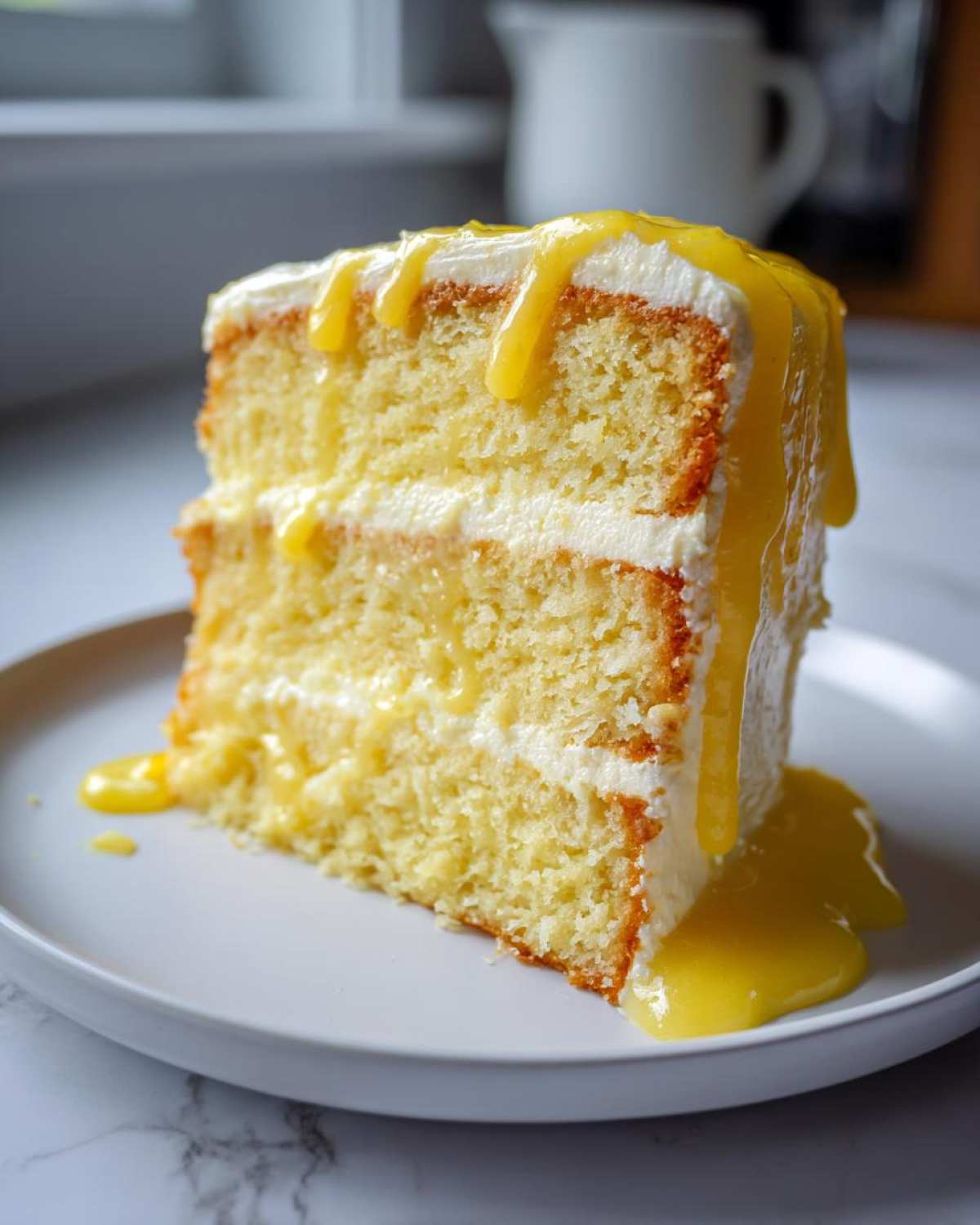
Okay, the cake layers are cooled, which means it’s time for the best part—the bright, tangy topping! This glaze is so simple, but it turns your perfectly moist lemon cake recipe into something that really sings. We’re aiming for a texture that’s thick enough to coat the top beautifully without immediately running off the sides of the cake.
In a simple bowl, whisk your 2 cups of powdered sugar while slowly drizzling in the 4 tablespoons of lemon juice. If it looks stiff or pasty instantly, don’t panic! Just add a tiny splash more juice—I mean, literally a teaspoon at a time—until it’s smooth and pourable. You want it to drip elegantly, not flood the cake. Once it hits that perfect pourable consistency, slather it on!
Tips for Success with Your Homemade Lemon Cake
I feel like every great Homemade Lemon Cake relies on a few little secrets that don’t always make it into the basic ingredient list. Baking is science, sure, but it’s also intuition, and paying attention to the small stuff makes all the difference between good and absolutely unbelievable. If you want to nail that moist crumb every single time, you have to honor the ingredients!
My number one rule, which I learned the hard way after a sunken disaster once, is that all your cold stuff—the butter, the milk, and especially those four eggs—needs a solid hour on the counter to come up to room temperature. Cold ingredients just don’t want to mix properly with the creamed butter and sugar, and that’s how you get little pockets of unmixed butter sitting in your batter. Not good!
Also, please, please, please use fresh lemons! You can buy my favorite zesting tool here: when baking with fresh lemons you get so much more aromatic oil from the zest. Bottled juice is fine in a pinch, but for this cake, fresh is king.
Ingredient Notes and Substitutions for This Lemon Cake Recipe
I get asked all the time about swaps, and while I strongly advocate for using exactly what’s written in this lemon cake recipe, sometimes life happens! If you don’t have whole milk, full-fat buttermilk is a fantastic substitution. Buttermilk adds a slight tang and its inherent acidity helps activate the baking powder just a little bit more, which can actually boost tenderness.
Now, about the zest: If you are super short on time and want to use lemon extract instead of fresh zest, be careful! Extract is much more concentrated than natural oils. I’d start with maybe half a teaspoon, taste the wet mixture, and then add more if you think it needs it. But honestly, you haven’t lived until you’ve used genuine fresh lemon zest in your batter. It just makes this a superior lemon cake recipe.
Variations on the Classic Lemon Cake Recipe
While I absolutely adore making this as a classic two-layer cake, it’s so versatile! Sometimes you need a cake that travels better, or maybe you just don’t want to mess with stacking layers for a big party. That’s when we get creative with the format of this incredible lemon cake recipe.
If you’re looking for something simpler or something more decorative, I’ve got you covered. A little bit of planning and you can turn this into a different showstopper entirely!
For those times when you want speed but still want that incredible homemade lemon flavor, look at some of my faster options, including how to adapt it for different pans. You can even find some related ideas when you check out my fun lemon blueberry muffins recipe!
Making it a Bundt Cake
If you use a standard 10-cup Bundt pan, you’re looking at needing about 42 ounces of batter. This batter amount should cover it perfectly. Because Bundt patterns are often deeper, you might need to give it an extra 10 to 15 minutes in the oven compared to the layers. I always check it by gently tapping the side of the pan—if the whole cake jiggles a lot in the middle, it needs more time!
Switching to Loaf Pans
Loaf cakes are perfect for gifts or for anyone wanting an individual slice of sunshine. If you use standard loaf pans (say, 9×5 inches), the heat takes much longer to penetrate that dense shape. Bake time jumps significantly—plan for closer to 50 or 60 minutes. I strongly recommend baking them on a sheet pan for stability and lining them well with parchment paper!
Adding Extra Flavor Swirls
Want to mix things up? Before you pour the batter, try this: warm up about half a cup of raspberry jam slightly, thin it down just a hair with a teaspoon of lemon juice, and then gently swirl ribbons of that jam through the batter in your pans. When you add the lemon glaze on top, the combination of tart lemon and sweet raspberry is just heavenly. Poppy seeds are another simple addition you can fold in right at the end if you want a little crunch!
Storage & Reheating Instructions for Your Lemon Cake
Nobody wants to see this amazing lemon cake go bad, so let’s talk storage! The way you keep this beauty depends entirely on whether or not you’ve put that gorgeous, sugary glaze on top yet. It’s really important to treat the glazed versus unglazed cakes differently if you want that perfect crumb to last.
If you’ve managed to save those gorgeous, unglazed layers—hats off to you! Wrap each fully cooled layer tightly in plastic wrap, making sure it’s sealed well so it doesn’t pick up any fridge smells. Those can stay totally fine on the counter, lightly covered, for about two days. If you need them to last longer, pop them into the freezer. They freeze beautifully!
Now, once the glaze is on the cake—that’s when we get a bit more sensitive. Because the glaze is super sugary, it actually acts as its own preservative, but humidity is the enemy of a nice, crisp glaze. Always store the finished cake in an airtight container at room temperature. It should stay fresh and moist for a solid three to four days.
Freezing the Finished Cake
You absolutely can freeze the whole thing, glaze and all! My trick here is to use the freezer method I mentioned earlier: wrap those cooled layers tightly before you glaze them. Once they are wrapped well, go ahead and cover them with a layer of aluminum foil too. They’ll keep perfectly for up to two months this way.
When you pull them out to thaw, just let them sit on the counter, still wrapped, for a few hours. Once they are room temperature, *then* you can unwrap them and apply the fresh lemon glaze. If you try to glaze a partially frozen cake, you’ll just end up with a runny, sad mess, and we certainly don’t want that!
We don’t really reheat cake like this, since it’s designed to be eaten at room temperature, but if you absolutely must serve a slice warm (maybe for breakfast?), just zap a small piece in the microwave for about 8 to 10 seconds max. Any longer and you risk drying out that beautiful tender crumb we worked so hard for!
Frequently Asked Questions About This Lemon Cake Recipe
I get so many messages about this particular lemon cake recipe, so let’s tackle some of the most common hangups right here! Nine times out of ten, if you run into an issue, the answer lies somewhere in the temperature of your ingredients or how aggressively you mix the batter. It’s never complicated, I promise!
If you have a question that isn’t answered below, feel free to drop a line in the comments or check out my general baking disclaimer page!
What gives this cake its amazing, zesty flavor?
It’s all about the fresh citrus! We aren’t relying on bottled flavor here. The combination of fresh lemon juice mixed into the batter *and* the fresh lemon zest sprinkled throughout the dry ingredients builds layers of flavor. The zest holds the essential oils, giving you that powerful aromatic punch that makes this a truly Refreshing Lemon Dessert!
Why did my cake sink slightly after I took it out of the oven?
Usually, sinking is a timing issue. It means the structure wasn’t completely set when it left the heat. This often happens if you opened the oven door too early while it was baking, or if your baking powder is old and not providing enough lift. For this recipe, make sure you stick exactly to the 30–35 minute bake time and only check it with that wooden pick when the time is up!
Can I make this an Easy Lemon Cake using a box mix?
Oh, I totally get the need for a shorter route sometimes! You absolutely can cheat a little and use a standard white or vanilla box cake mix. The key to making it taste like *mine* when using a shortcut is boosting the flavor. Replace the liquid the box calls for with the same amount of whole milk, and incorporate my full tablespoon of fresh lemon zest directly into the batter. For the glaze, definitely still make my fresh lemon glaze—it hides even the most basic box mix flavor!
How do I ensure I get that perfect, glossy finish with the glaze?
The gloss depends on the sugar-to-liquid ratio, but also on the cake temperature! You MUST wait until the cake layers are completely cool before you pour the glaze on. If the cake is even slightly warm, the heat melts the powdered sugar, and it absorbs completely into the cake instead of sitting on top as a beautiful, slightly opaque, glossy layer. Patience pays off here!
Serving Suggestions for This Tangy Sweet Cake
Now that you’ve made the world’s most perfect lemon cake, how are you going to serve it up? This Tangy Sweet Cake is lovely all by itself, especially with that bright glaze dripping down the sides. But if you’re bringing it to a party or serving it after a big dinner, a few simple additions really take it over the top!
Honestly, I love serving a slice next to a bowl of fresh, slightly tart raspberries—the red and yellow combo looks stunning! A light dollop of freshly whipped cream that hasn’t been oversweetened helps balance the intense lemon tang beautifully. If you’re having an afternoon gathering, you absolutely have to try it with a cool glass of my sparkling apple cider sangria—it’s the ultimate spring treat!
PrintMoist Lemon Layer Cake with Fresh Lemon Glaze

This recipe yields a very moist, zesty lemon layer cake from scratch, topped with a simple, tangy lemon glaze.
- Prep Time: 20 min
- Cook Time: 35 min
- Total Time: 55 min
- Yield: 12 servings
- Category: Dessert
- Method: Baking
- Cuisine: American
- Diet: Vegetarian
Ingredients
- 2 1/2 cups all-purpose flour
- 1 1/2 cups granulated sugar
- 1 tablespoon baking powder
- 1/2 teaspoon salt
- 1 cup unsalted butter, softened
- 4 large eggs
- 1 cup whole milk
- 1/4 cup fresh lemon juice
- 1 tablespoon lemon zest
- 1 teaspoon vanilla extract
- For the Glaze: 2 cups powdered sugar
- For the Glaze: 4 tablespoons fresh lemon juice
Instructions
- Preheat your oven to 350°F (175°C). Grease and flour two 9-inch round cake pans.
- In a large bowl, whisk together the flour, sugar, baking powder, and salt.
- Add the softened butter to the dry ingredients. Beat with an electric mixer on low speed until the mixture resembles coarse crumbs.
- In a separate medium bowl, whisk together the eggs, milk, lemon juice, lemon zest, and vanilla extract.
- Gradually add the wet ingredients to the dry ingredients, mixing on medium speed until just combined. Do not overmix.
- Divide the batter evenly between the prepared cake pans.
- Bake for 30 to 35 minutes, or until a wooden pick inserted into the center comes out clean.
- Let the cakes cool in the pans for 10 minutes before inverting them onto a wire rack to cool completely.
- While the cakes cool, prepare the glaze: Whisk the powdered sugar and lemon juice together until smooth. Add more lemon juice, one teaspoon at a time, if the glaze is too thick.
- Once the cakes are completely cool, place one layer on a serving plate. Spread a thin layer of glaze over the top. Place the second layer on top.
- Pour the remaining glaze over the top of the cake, letting it drip down the sides. Allow the glaze to set before slicing.
Notes
- For a loaf cake, bake for 50 to 60 minutes in a greased 9×5 inch loaf pan.
- If you prefer a stronger lemon flavor, increase the zest to 2 tablespoons.
- This cake freezes well once cooled and before glazing.
Nutrition
- Serving Size: 1 slice
- Calories: 380
- Sugar: 45g
- Sodium: 250mg
- Fat: 18g
- Saturated Fat: 11g
- Unsaturated Fat: 7g
- Trans Fat: 0.5g
- Carbohydrates: 53g
- Fiber: 1g
- Protein: 5g
- Cholesterol: 95mg