

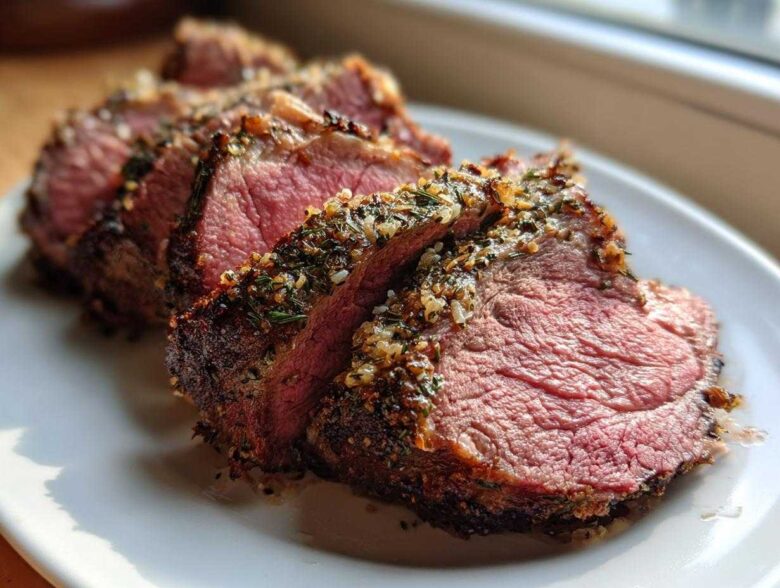
Alright, listen up. If you’ve ever looked at that massive, beautiful bone-in roast sitting in your fridge before a big holiday dinner and thought, “I’m going to mess this up,” you are not alone. Roasting a prime rib feels high-stakes, right? It’s the centerpiece! Fear of grey, dry edges haunts us all.
Well, deep breaths. I’ve been there, I’ve stressed, and I’ve ruined a few too many expensive cuts before I cracked the code. That’s why I’m handing over my absolute favorite, most reliable prime rib recipe. This isn’t just *a* recipe; this is my secret weapon for guaranteed juicy results every single time, hitting that sweet spot of medium-rare perfection. If you follow me, you’re going to nail this Christmas dinner, I promise!
I learned this method years ago when my brother-in-law swore I’d spend the whole meal hiding in the kitchen. Spoiler alert: the roast was the star, and I looked like a culinary genius. It’s all about managing heat, and once you trust the process, it becomes one of the easiest things you’ll ever cook. Seriously, come see what I mean!
Why This Foolproof Prime Rib Recipe Works Every Time
The reason people panic over this cut is usually the heat. You either cook it too low for too long and get that sad grey ring around the edges, or you crank it up and end up with roast beef jerky. Not happening here!
This is where the magic of my foolproof prime rib technique—the blast sear—comes in. We shock the outside first at a blazing 500 degrees. That gives us an instant, dark, delicious crust, thanks to that buttery herb rub we put on. Then, we immediately back off the heat to 325 degrees. That temperature transition is the secret to the juicy prime rib oven method. It locks everything in!
Achieving Perfect Medium Rare Roast Beef Doneness
You absolutely must trust your thermometer for this. Forget the window in the door; that’s your enemy on a big roast! I use my digital instant-read thermometer every time—it’s non-negotiable for perfection. For that gorgeous edge-to-edge medium rare roast beef, you need to pull that roast out when the center hits exactly 125 degrees Fahrenheit. I know it sounds early, but trust me on this part.
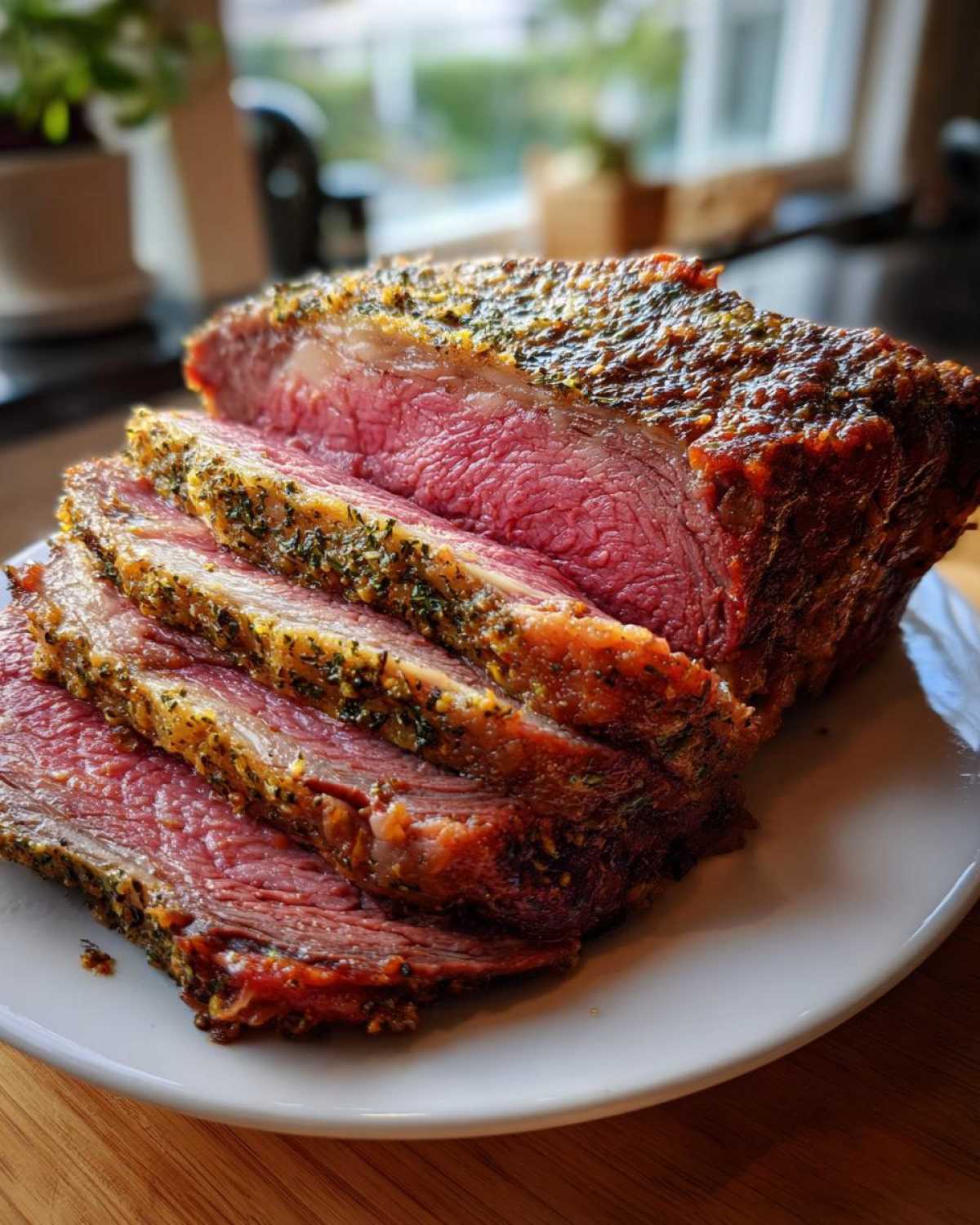
Remember carryover cooking! When you pull it off the heat and tent it loosely, the temperature keeps creeping up as the heat redistributes through that massive piece of meat. It’s going to coast right up to a beautiful 130–135 degrees. That’s how you get a tender roast that melts in your mouth!
Ingredients for the Ultimate Prime Rib Recipe
Okay, the ingredients list for this ultimate prime rib recipe is surprisingly short, but quality is everything here. You want the best cut you can afford because this roast is the star of the show! I always ask my butcher for a bone-in cut—the bones really help insulate the meat and keep it unbelievably moist. You need about 1 pound per person, so plan accordingly!
The real flavor comes from our glorious coating. We aren’t messing around with complicated rubs; we’re going straight for richness with a classic garlic butter prime rib flavor profile. Make sure that butter is properly softened; you don’t want chunks in your rub!
- 1 bone-in prime rib roast (about 5-6 lbs)
- 2 tablespoons kosher salt
- 1 tablespoon black pepper
- 1 tablespoon dried thyme
- 1 tablespoon dried rosemary
- 6 cloves garlic, minced
- 4 tablespoons unsalted butter, softened
- 1 tablespoon olive oil
If you want to see another way I use rich, flavorful butter, check out my recipe for Garlic Butter Steak Bites—it uses the same philosophy!
Ingredient Notes and Substitutions for Your Prime Rib Recipe
A couple of quick notes before you mix that butter paste. First, stick to kosher salt. The larger flakes adhere better to the roast and create that signature salty, savory crust without tasting metallic. Don’t substitute it for table salt—you’ll end up with totally different results!
If you absolutely cannot find a bone-in standing rib roast, go ahead and grab a boneless cut. Just know you’ll need to adjust the cooking time slightly, probably shaving off about 15 to 20 minutes total, since there’s no bone buffer. Honestly, your best bet is always to buy the best quality beef you can find; it makes such a difference in the final tenderness.
Step-by-Step Standing Rib Roast Instructions
This is where the magic happens, but don’t freak out! If you follow these standing rib roast instructions precisely, you skip the stress entirely. The most important thing you can do before you even think about turning on the oven is to get that roast out of the fridge.
You need that big piece of meat to come up to room temperature—about two hours is a good rule of thumb for a roast this size. This allows it to cook more evenly from edge to center. After it sits out, grab a stack of paper towels. I mean it—pat this roast until it is bone dry on all sides. Any moisture left on the surface turns into steam in the oven, and steam stops the crust from forming. We want a crust, not a steamed roast!
Once it’s perfectly dry, you can check out the general timings on my Roast Beef Cooking Chart, but remember, we are sticking to the thermometer goal for perfection!
Preparing the Herb Crusted Prime Rib Recipe
While that beauty is warming up, let’s mix up the best coating you’ll ever use for beef! In a small bowl, take that softened butter and mash in your minced garlic—use more than the recipe calls for if you love garlic, I won’t tell! Then, mix in your thyme, rosemary, salt, and pepper. Mix it until it looks like green, chunky, glorious butter paste.
Take your roast, drizzle it with just a little olive oil—that helps the butter stick—and then just slather that herb crusted prime rib mixture all over every single surface. Don’t be shy! Really press it into the meat. This layer is what’s going to give us that deeply browned, herbaceous exterior while keeping the inside juicy. Once it’s coated, set it on your roasting rack in the pan, fat side facing up towards the ceiling.
The Critical Roasting Phase for Your Prime Rib Recipe
Now we sear. Preheat that oven to 500 degrees Fahrenheit before you even get the roast coated! Nobody wants to wait for a blazing hot oven. Once it’s ready, pop that roast in and set your timer for exactly 15 minutes. That intense, quick heat starts forming the crust right away.
When that timer goes off, do not touch the oven door! Reduce the temperature immediately down to 325 degrees Fahrenheit. Don’t even let the heat stabilize—just crank the knob down. Now, this is where your thermometer is your best friend while you wait for that beautiful medium rare roast beef to develop. Roast following the general guide, but always rely on internal temperature. For medium-rare, you are aiming to pull it when the thickest part reads 125°F.
When you hit 125°F, yank that pan out of the oven. Don’t be tempted to peek inside again; just wrap the whole thing loosely in foil and let it chill out on the counter. We’ll talk about why that rest is so important next!
The Essential Rest Period for a Tender Roast Beef for Holidays
I know, I know. You pulled your stunning Christmas centerpiece roast out of the oven, and now everyone is standing by the counter, knife in hand, tapping their foot impatiently. But you absolutely cannot slice that roast yet! Resist the urge!
Resting isn’t just a suggestion; it’s part of the cooking process for any big cut like this. When the meat gets hot, those muscle fibers tighten up like tiny fists, squeezing all those beautiful, flavorful juices right into the center of the roast. If you cut into it right away, all that hard-earned moisture flows out onto your cutting board, leaving you with dry slices.
What we need is time for those fibers to relax and reabsorb the liquid. Tent that roast loosely with foil—don’t wrap it tight, or you’ll steam off that gorgeous herb crust—and walk away for a minimum of 20 minutes. Seriously, set a timer and go pour yourself a much-deserved glass of wine. That minimum resting time ensures you get the most tender roast beef for holidays possible!
Making the Simple Prime Rib with Au Jus
While that roast is busy resting (and you are busy congratulating yourself, hopefully!), we need to deal with the pan. Don’t you dare wash that pan! Those browned, caramelized, herby bits stuck to the bottom? That’s pure liquid gold. That’s the foundation for the best prime rib with au jus you’ve ever had.
This au jus is ridiculously easy, and it tastes a million times better than any packet mix you could ever buy. It really makes the whole holiday roast feel complete, doesn’t it? You’re going to take that roasting pan—drippings and all—and stick it right on the stovetop over medium heat. Turn the burner on, and grab a wooden spoon.
You need to scrape up all those bits stuck to the bottom. That process is called deglazing, and it releases all that concentrated beef flavor. Swirl it around until most of those stuck bits are dissolved into the melted fat. If you want to see another amazing way to elevate the flavor base of a dish using richness, you should check out what I do with butter in my Peach Butter Recipe—it’s all about layering flavor!
Once that’s scraped, pour in about two cups of good, hot beef broth. Let that simmer gently for about five minutes. As it simmers, you might see some excess fat floating on top. Just skim that off with a spoon and toss it. After it’s simmered, pour the whole mixture through a fine-mesh sieve into a little gravy boat or pitcher. That’s it! You’ve got homemade au jus ready to go the second you slice into that perfectly cooked roast.
Tips for a No Stress Prime Rib Recipe Experience
Look, I know this prime rib recipe can seem intimidating because of the size and the cost, but I promise you, once you’ve nailed the temperature technique, it becomes absolutely stress-free. The biggest “no stress” tip is about buying the right meat. Always try to get a bone in prime rib roast if you can swing it. Those bones are like little heat shields, giving you more margin for error before the center overcooks. Do not buy the piece next to the end where they cut off the bone—that’s usually the worst-cooked piece at the store!
Also, make sure your meat thermometer probe is calibrated and working! Seriously, this is the tool that makes you look like you went to culinary school. When you insert it, make sure you’re aiming dead center in the thickest part of the roast, and here’s a big warning: keep that probe tip clear of the bone. If it touches the bone, you’ll get a false high reading, and you’ll pull the roast way too early. If you’re nervous, just use an instant-read thermometer by poking the side every 15 minutes after you drop the temp to 325°F.
Serving Suggestions for Your Christmas Centerpiece Roast
Okay, once you’ve rested that gorgeous roast and carved it perfectly, you need sides that can keep up with that incredible flavor! You want things that soak up just a little of that leftover au jus, if you know what I mean.
For me, nothing beats the classics when I pull this out as my Christmas centerpiece roast. You absolutely need creamed spinach—the richness of the cream against the peppery, herby crust is divine. And, of course, homemade mashed potatoes. Don’t use instant stuff! If you need soft, fluffy potatoes fast, check out my method; it’s super reliable.
A great green bean casserole is always welcome, and honestly, a simple side salad with a sharp vinaigrette helps cut through all that richness. Keep the sides simple and classic, which lets your perfectly cooked, juicy prime rib shine!
Storing and Reheating Leftover Prime Rib Recipe Portions
It’s rare that we have leftovers of this prime rib recipe, but when we do, saving it right is key so it tastes great the next day! If you’ve got slices left, get them into an air-tight container immediately. Store them in the fridge, and honestly, they should be fine for about three to four days—any longer, and you risk losing quality. Check out my privacy policy while you’re scooping them up!
Reheating is where most folks mess up the great leftovers they saved. Don’t zap dry slices in the microwave! That’s guaranteed disaster. The secret to keeping that leftover roast wonderfully tender is moisture.
Take your slices and put them in a small oven-safe dish. Pour just a splash of your saved au jus—or, if you ran out, a little beef broth works great—right over the bottom of the slices. Cover the dish tightly with foil (this creates steam) and put it in a 300-degree oven for about 10 minutes until warmed through. It keeps that meat soft and flavorful, ready for next-day sandwiches or quick weeknight dinners!
Frequently Asked Questions About This Prime Rib Recipe
Can I use the reverse sear method for this prime rib recipe?
That’s a great question! A lot of folks love the reverse sear—where you cook it low and slow the whole time, then blast it hot at the end. It’s fantastic, I won’t lie. However, for this specific prime rib recipe, I really stand by the 500-degree blast first, then drop to 325°F method. Why? Because it’s honestly faster and I find it’s a little more forgiving for people who are tackling their first big roast. The initial sear locks in the crust flavor quicker, which makes the whole process feel much less stressful!
What is the best temperature for a perfectly cooked prime rib?
The “best” temperature really depends on how you like your beef, but for that classic, tender, pink center, the goal is 125 degrees Fahrenheit when you pull it off the heat. That’s the magic number for achieving a beautiful perfectly cooked prime rib that hits medium-rare.
Remember what I told you earlier about the resting? That lingering heat—the carryover cooking—is responsible for pushing the temperature up another 5 to 8 degrees. So, when you pull it at 125°F, it naturally ends up right around 130–135°F by the time you slice it. If you let it hit 135°F in the oven, you’re going to end up with medium, not medium-rare, so watch that thermometer like a hawk if you’re aiming for pink!
If you are ever unsure about cooking times or temperatures for various cuts, you can always check out my general reference guide here, but for this roast, stick to the 125°F target!
Share Your Perfect Prime Rib Recipe Success
Whew! Now that you’ve got the step-by-step instructions for the best holiday roast beef recipe imaginable, it’s time for the fun part: enjoying it! Seriously, just smelling that garlic herb crust as it comes out of the oven is going to make you feel like a total kitchen boss. My favorite thing in the world is knowing that a recipe I trust kept you stress-free while cooking the perfect centerpiece.
Once you’ve carved up that beautiful, juicy roast and served it with the au jus, I want to know how it went! Did you hit that perfect 130 temperature? Did your family act like you hired a private chef? Tell me everything!
Please take a moment to give this prime rib recipe a rating right below this section. Those star ratings really help other home cooks who might be nervous about tackling a big roast for the first time. Your honest feedback is what keeps this whole community going!
If you took a picture of that perfectly sliced, medium-rare roast—and let’s be honest, you totally did—I’d love for you to share it! Tag me on social media or drop a picture in the comments. It helps me know you used the recipe, and frankly, I just love seeing people celebrate a successful meal. If you want to check out my thoughts on site usage and privacy, you can review my Cookie Policy before you head out!
Happy cooking, and here’s to many more stress-free holidays!
PrintFool-Proof Perfect Oven-Roasted Prime Rib with Garlic Herb Crust
This recipe provides simple steps for roasting a bone-in prime rib to a perfect medium-rare using a high-heat sear method, resulting in a tender, juicy roast with a flavorful garlic herb crust and easy au jus.
- Prep Time: 20 min
- Cook Time: 1 hr 45 min
- Total Time: 2 hr 5 min
- Yield: 6 servings
- Category: Main Course
- Method: Oven Roasting
- Cuisine: American
- Diet: Low Fat
Ingredients
- 1 bone-in prime rib roast (about 5-6 lbs)
- 2 tablespoons kosher salt
- 1 tablespoon black pepper
- 1 tablespoon dried thyme
- 1 tablespoon dried rosemary
- 6 cloves garlic, minced
- 4 tablespoons unsalted butter, softened
- 1 tablespoon olive oil
Instructions
- Remove the prime rib from the refrigerator 2 hours before cooking. Pat the roast completely dry with paper towels.
- Preheat your oven to 500 degrees Fahrenheit.
- In a small bowl, combine the softened butter, minced garlic, thyme, rosemary, kosher salt, and pepper to create the herb butter.
- Rub the entire surface of the prime rib evenly with olive oil, then generously spread the herb butter mixture over the roast.
- Place the roast, fat side up, on a roasting rack set inside a sturdy roasting pan. Do not add liquid to the pan yet.
- Roast at 500 degrees Fahrenheit for exactly 15 minutes.
- Reduce the oven temperature to 325 degrees Fahrenheit. Continue roasting until the internal temperature reaches 125 degrees Fahrenheit for medium-rare (this usually takes about 13-15 minutes per pound after the initial sear). Use a meat thermometer inserted into the thickest part of the meat, avoiding the bone.
- Remove the roast from the oven when it reaches 125 degrees Fahrenheit. Tent it loosely with foil. Let the roast rest for at least 20 minutes before slicing. The internal temperature will rise to about 130-135 degrees Fahrenheit during resting.
- While the roast rests, prepare the au jus: Place the roasting pan (with drippings) over medium heat on the stovetop. Scrape up any browned bits from the bottom of the pan. Add 2 cups of beef broth. Simmer for 5 minutes, skimming any excess fat from the top. Strain before serving.
- Slice the roast between the bones and serve immediately with the au jus.
Notes
- For a boneless roast, adjust the cooking time slightly, checking the temperature sooner.
- If you prefer a more well-done roast, remove it from the oven when the internal temperature reaches 135 degrees Fahrenheit for medium, or 145 degrees Fahrenheit for medium-well.
- Resting the meat is essential; do not skip this step to keep the juices inside the roast.
Nutrition
- Serving Size: 6 oz cooked meat
- Calories: 450
- Sugar: 0
- Sodium: 450
- Fat: 30
- Saturated Fat: 15
- Unsaturated Fat: 15
- Trans Fat: 0
- Carbohydrates: 0
- Fiber: 0
- Protein: 40
- Cholesterol: 150